A prose novel in which Africans enslave Europeans.
Penguin UK, 2008 & Penguin USA, 2010
A reversal of the transatlantic slave trade in which Africans are the masters and Europeans are their slaves.
Welcome to a world turned upside down. Welcome to the world of Doris. One minute she’s playing hide-and-seek with her sisters in the fields behind their cottage. The next, someone puts a bag over her head and she ends up in the stinking hold of a slave ship sailing to the New World. When she finally arrives on a strange, tropical island, she discovers she’s considered a pig-ugly savage with a brain the size of a pea, whose only purpose in life is to please her mistress. Doris observes slavery from both sides. As an adult she becomes the personal assistant of her formidable master, Bwana, a.k.a. Chief Kaga Konata Katamba I. She also experiences the horrors of life in the sugarcane fields, where slaves are worked to death under the blazing sun. Doris dreams of escape, of finding those she has loved and lost, of returning home to her motherland: England.
Blonde Roots is at once a biting satire, a tragic family saga and a testament to the strength of the human spirit. REVIEWS of all books.
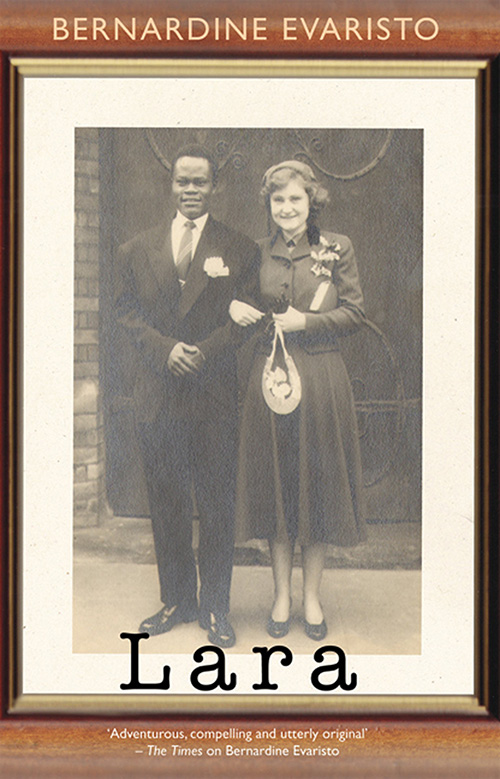
LARA Bloodaxe Books, 2009.
A semi-autobiographical verse novel about my family history: 150 years, 7 generations, five countries of origin. The cover photograph is of my parents’ wedding day in Camberwell, London, 1955. (This new edition is revised and expanded by a third from the 1997 edition.)
The eponymous Lara is a mixed-race girl raised in Woolwich, a white suburb of London, during the 60s and 70s. Her father, Taiwo, is Nigerian, and her mother, Ellen, is white British. They marry in the 1950s, in spite of fierce opposition from Ellen’s family, and quickly produce eight children in ten years. Lara is their fourth child and we follow her journey from restricted childhood to conflicted early adulthood, and then from London to Nigeria and Brazil, as she seeks to understand herself and her ancestry.
The novel travels back over 150 years, seven generations and three continents of Lara’s ancestry. It is the story of Irish Catholics leaving generations of rural hardship behind and ascending to a rigid middle class in England; of a German immigrant escaping poverty and seeking to build a new life in 19th-century London; and of proud Yorubas enslaved in Brazil, free in colonial Nigeria and hopeful in post-war London. Lara explores the lives of those who leave one life in search of a better life elsewhere, but who end up struggling to be accepted even as they lay the foundations for their children and future generations.
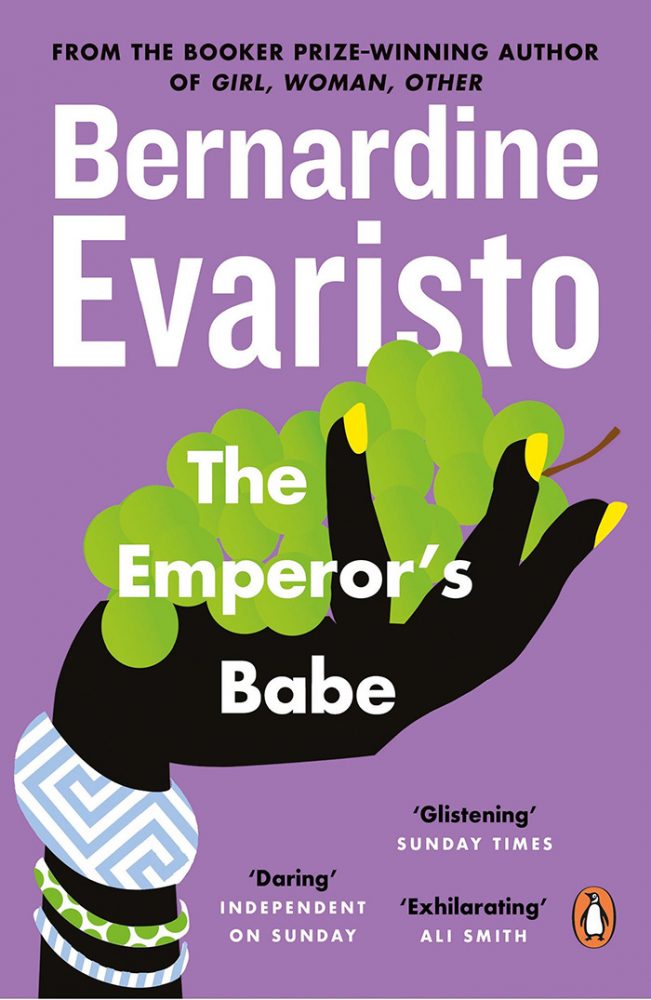
THE EMPEROR’S BABE, Penguin, 2001
A verse novel about a black girl growing up in Roman London 1800 years ago.
Londinium, 211 AD. A city of slum tenements and sumptuous villas, of orgy queens, drag queens and drama queens. A city where the currency is often sex, where children go to work aged five and marriage is a career move. Through the bustling city, we follow Zuleika – feisty and precocious daughter of Sudanese immigrants-made-good. Married off at eleven to Felix, a rich Roman three times her age, perpetually away on business, Zuleika drifts about his villa, bored, until one night several years later when Septimius Severus, the Roman emperor, newly arrived in town, spots her at the theatre…
Penguin, 2005
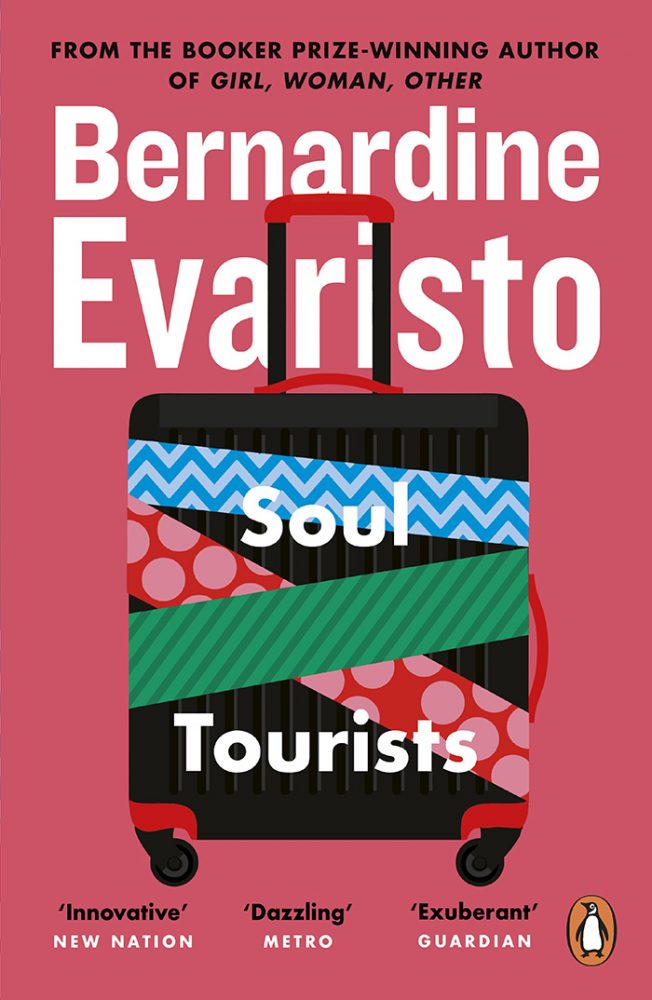
An experimental novel mixing prose, poetry, prose-poetry, scripts and other non-fiction devices. Soul Tourists is about a mismatched, conflicted couple who go on an indefinite car journey across Europe and end up in the Middle East. The man, Stanley, meets ghosts of colour from European history along the way who transform his understanding of the continent and sense of belonging. These include Pushkin and his African great-grandfather, the mixed-race Alessandro de’ Medici of Florence, the Chevalier de St. Georges, Mary Seacole and Hannibal of Carthage.
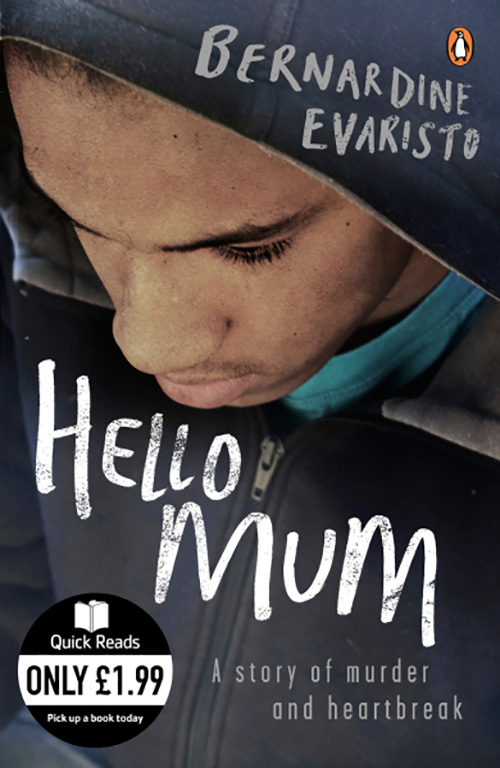
Hello Mum, Penguin, 2010
An epistolary novella told in the voice of a 14 yr old boy who lives on a London estate and gets into trouble. His plight and the issue of gang culture, is neither demonised or glamourised. Instead, his story deepens our understanding of the context of his life and the decisions he makes that shapes it.
LARA (original cover) 1997